

How many times have you attempted to start a new workout plan, diet, meditation practice, etc. and found yourself quitting a few days into it?
How many times have you had a friend or family member tell you how excited they are to embark on their new wellness journey only to hear that they pulled the plug a couple of days into it?
I know that I am one of those people who has set out to reach new levels of health and wellness only to be curled up on the couch sore, stiff, hungry, and mentally beat a few days later.
When we set new health and wellness goals, we often get ahead of ourselves. We often end up feeling as though we are not cut out to be and do better. We often end up feeling like we don’t have what it takes. The issue is not us, it’s our goals.
While setting big goals is great, we often confuse attainable with realistic. Most, if not all the goals that we set for ourselves are completely within our [future] reach. Most of the goals that we set for ourselves are not realistic as they do not align with our present capabilities.
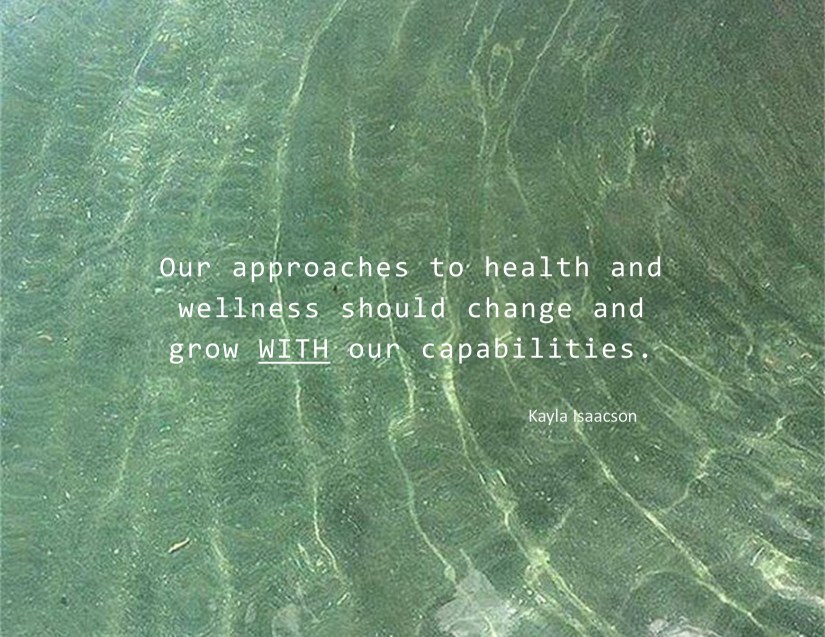
When we confuse attainable with realistic goals, it can be detrimental to our ability to define our connection to our goals, and foster the motivation needed to achieve those goals.
Many of the plans that “fail” do so not because of an inability to follow through, but because of a lack of education and honest and realistic self-evaluation.
We cannot be at the bottom and expect to magically end up at the top without building a solid foundation to slowly lift us up. Everyone’s foundation is going to look a little different. It can become very confusing and frustrating when we start trying to compare our journey to that of another.
If you are someone who wants to build a better physique, but has never touched a dumbbell in your life you can’t expect to have perfectly toned buttocks and shoulders two weeks from the time you decide you want to pursue change.
…. For you, the warmup will most likely be the workout initially. When you attempt to dive head first into 4 sets of squats with 15 repetitions at 45 pounds, you may not even be able to do it, but if you are able to power through, you most likely will not be able to walk the next day. When it comes to weightlifting slow and steady wins the race. Low repetition ranges at lower weights with one to two rest days between for a few months is going to be key when it comes to building the muscles of your body, strengthening the mind muscle connection, and perfecting your foundational and functional movements.
If you are someone who feels compelled to clean up your diet, you cannot expect to cut X out of your current diet cold turkey and feel immediately feel amazing.
…. If your goal is to eat less added sugars and refined carbohydrates your first few days and weeks should most likely entail making one to two swaps a day, not attempting to cut out carbs completely. Carbohydrates should not be cut out of anyone’s diet completely, but healthier habits are always great to aim for. Instead of having every meal out, or having sweets after each meal, maybe try to cut back on one a day. Sudden, and huge dietary changes will not make anyone feel good. A balanced mix of varied carb, protein, and fat sources is the key to a healthy and sustainable diet.
If you are someone who hopes to build a meditation practice/routine but has never sat alone with your own thoughts for more than 30 seconds, you cannot expect to discover your inner tranquility for quite some time.
…. The mind is a muscle. Meditation and focus require a strong mental muscle. Mental fitness is a real thing, and it requires work and maintenance just like any other muscles in the body. If your plan is to sit down for 30 minutes on day one and meditate, I can almost assure you that you will end up frustrated by minute 5, if not sooner. The ability to shift your focus and focus your mind on the here and now, or whatever you hope to focus on is not one that comes easily to most. The mind loves to wander and do everything except what we want it to do.
If you are someone who would like to start waking up two hours earlier than you currently do on the weekends so you can get more done, you shouldn’t expect to just wake up two hours earlier and feel amazing.
…. If you are someone who goes to bed at midnight and wakes up at 10 AM and one day decides that you want to wake up at 8 AM so you can be more productive…. good luck. Sleep hygiene is like our personal hygiene, it takes effort and dedication to keep it healthy. Slowly changing your nighttime routine/habits and gradually changing your sleep and wake times is going to be key to making sure that you are awake, alert and fully functional come 8 AM.
The examples of possible behavior modifications and changes are endless.
Any planned change is going to require a lot of planning, self-evaluation, goal setting, and much more. Whether you hope to improve your physical fitness, your diet, your sleep hygiene, what have you, you are going to have to put in the initial work and build your foundation so you can do so successfully.
It is crucial to honestly evaluate our current capabilities when it comes to planning behavior change. To plan to do something that you do not have the tools for is setting yourself up for major backfire. As our capabilities change, improve, and grow we become able to take on more and set bigger goals.
It is essential that we accept where we are at any given point and plan accordingly.

 Intuitive Health & Living